Teaching Artificial Intelligence in Education: A Look Inside My Online Course

Image generated with AI

I’m thrilled to share a bit about my online course, “Artificial Intelligence in Education,” which explores the exciting intersection of artificial intelligence and the future of learning. This course is designed for educators, administrators, and anyone passionate about leveraging AI’s potential to transform the educational landscape. It’s a journey through the core concepts of AI, practical tools, ethical considerations, and culminates in a personalized action plan and final project. Let’s take a peek inside each module:

Module 1: Introduction to Artificial Intelligence

We kick things off with the fundamentals. What is AI, really? This module demystifies the jargon and introduces key concepts like machine learning, natural language processing, and computer vision. We explore the history of AI, discuss its current applications beyond education, and lay the groundwork for understanding how these technologies can be applied in the classroom. Think of this as your AI 101 – no prior technical knowledge required! We focus on building a solid understanding of the core principles before diving into specific applications.

Module 2: AI Tools for Teaching and Learning

This is where the rubber meets the road! Module 2 is all about exploring practical AI tools that educators can use right now. We delve into AI-powered platforms for personalized learning, automated grading, content creation, and more. Participants get hands-on experience with different tools, evaluating their strengths and weaknesses, and considering how they can best integrate them into their teaching practices. From AI-driven tutoring systems to tools that help generate lesson plans, this module is packed with actionable strategies and resources.

Module 3: Ethical Considerations in AI

With great power comes great responsibility. As we explore the potential of AI in education, it’s crucial to address the ethical implications. This module tackles important questions surrounding bias in algorithms, data privacy, the potential impact on student equity, and the future of human interaction in learning. We engage in thoughtful discussions and explore frameworks for responsible AI implementation in education. This module ensures we’re not just using AI, but using it ethically and thoughtfully.

Module 4: Developing your Action Plan

Armed with knowledge of AI concepts, practical tools, and ethical considerations, participants begin crafting their own personalized action plans. This module guides them through the process of identifying a specific challenge or opportunity in their educational context and developing a plan for leveraging AI to address it. We provide templates, resources, and feedback to help participants create actionable and realistic plans they can implement after the course. This is about turning theory into practice and creating a tangible roadmap for change.

Module 5: Designing and Presenting the Final Project

The culmination of the course! Participants bring their action plans to life by developing and presenting a final project. This could involve creating a prototype of an AI-enhanced learning activity, designing a professional development workshop on AI for colleagues, or developing a comprehensive implementation strategy for their school or district. This module provides support and feedback as participants refine their projects and prepare to share their work with the cohort. It’s a chance to showcase their learning and contribute to the growing conversation around AI in education.

This online course is more than just learning about AI; it’s about empowering educators to become leaders in the AI revolution. I’m incredibly excited to guide participants on this journey and see the innovative ways they will use AI to enhance teaching and learning. If you’re interested in learning more, please don’t hesitate to reach out! I’d love to answer any questions you have. To register for this course, go to the New England Institute for Teacher Education website.

Using AI In Education

It’s no secret that Artificial Intelligence is everywhere. Amazon shopping. Google Ads. The Classroom. Wait! What? Sure thing, AI has entered education and some are not too happy about that. Kids are “cheating” and having AI write their papers for them.

Maybe it’s not that the kids are cheating, but that educators need to consider a different way to assess what a student knows and is able to do. Back in my day, essays were a thing. Plagiarism existed then, but it just wasn’t as easy to manage. That was a very long time ago, and we’ve evolved. Or at least we should have.

Photo by Michael Dziedzic on Unsplash

I’ve used ChatGPT to give me assistance in formulating emails, laying out coursework, and designing professional-sounding documents. It doesn’t mean that I use the whole thing verbatim (although it IS tempting!) I know a professor who has had AI write entire labs on a science topic. Then he went back and edited it with both correct information as well as adding parts that needed to be there. A real timesaver for a busy educator.

AI is not perfect and not always correct. Designing assignments that help students get at the content in an authentic way can help. Let them try using AI to write something and then have them go back and fact-check things. Have them write a lesson with it to teach to the class. As long as they can explain the whole thing and can easily field questions. There are so many options for using it that don’t constitute cheating.

One of the most significant advantages of AI in education is its ability to provide personalized learning experiences. Traditional classrooms often struggle to meet the diverse learning needs of individual students. AI algorithms analyze the learning patterns and preferences of each student, tailoring educational materials and pacing to match their unique requirements. This ensures that students can learn at their own pace, leading to better understanding and retention of knowledge.

AI-powered Intelligent Tutoring Systems (ITS) act as virtual tutors, offering personalized guidance and support to students. These systems can identify areas where a student is struggling and provide additional resources, practice problems, and explanations to help them grasp difficult concepts. ITS not only enhance students’ understanding but also boost their confidence and motivation to learn.

Educators often find themselves burdened with administrative tasks, such as grading assignments and managing schedules. AI-driven tools can automate these tasks, allowing teachers to focus more on teaching and mentoring students. Automation not only saves time but also ensures greater accuracy and consistency in tasks like grading, enabling teachers to provide more timely and constructive feedback to their students.

AI technology has opened new avenues for inclusive education, especially for students with special needs. AI-powered applications can customize learning materials, offer interactive exercises, and provide real-time feedback, catering to the specific requirements of students with disabilities. This inclusion empowers every student to participate actively in the learning process, fostering a more supportive and accessible educational environment.

AI systems can process vast amounts of data to identify patterns and trends in students’ learning behaviors. By analyzing this data, educators gain valuable insights into the strengths and weaknesses of their teaching methods and the student’s understanding of the subject matter. These data-driven insights enable teachers to make informed decisions, implement targeted interventions, and continuously improve their teaching techniques.

The integration of AI in education is not about replacing teachers but empowering them to provide a more enriching and personalized learning experience for students. By leveraging AI technologies, educators can create a learning environment that caters to the individual needs of each student, fostering a passion for learning and ensuring that no one is left behind.

As AI continues to advance, it is essential for educators, policymakers, and technology developers to collaborate effectively. By embracing the potential of AI in education, we can revolutionize the way knowledge is imparted, paving the way for a brighter and more inclusive future for learners around the world.

OpenAI. (2023). ChatGPT (September 25 Version) [Large language model]. https://chat.openai.com

What’s In Your Digital Toolbelt?

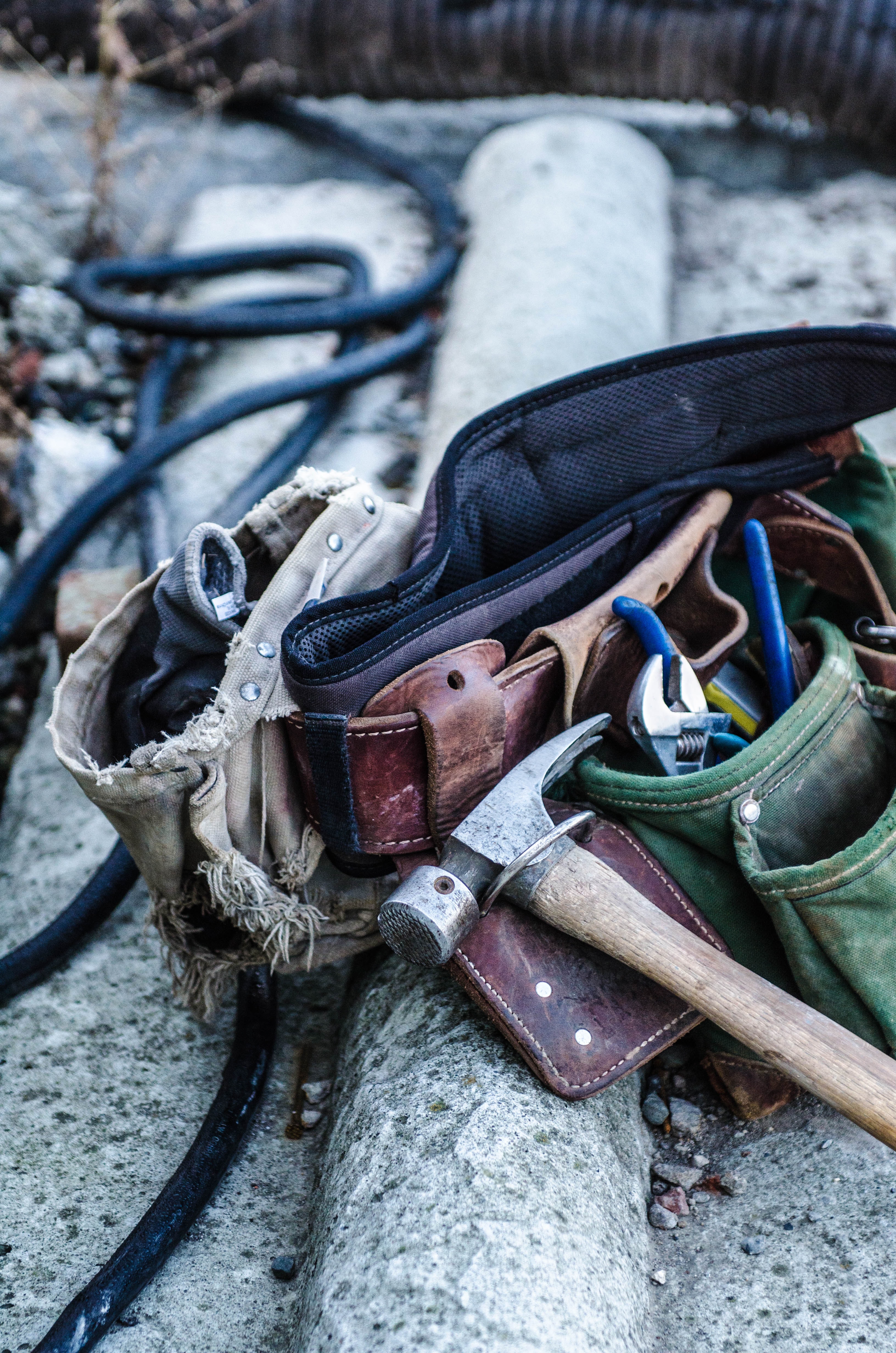
I love to remodel houses. There, I said it. I am the daughter of a handyman/builder who had no sons. I learned the art of deconstruction of an abandoned house on our property, saving boards, and pulling nails so we could reuse them later. I learned the mastery of the “Adjust-O-Matic” (known to most as a sledgehammer) at the ripe old age of 10. These lessons taught me that I needed specific tools for some things, but I could make do with other things that hung on my toolbelt depending on the job.

My digital toolbelt changes depending on what my school district approves, of course. But, I have some digital tools that I use to save time. I have digital tools to be more productive. I have digital tools that just feel right to me. So what’s in your digital toolbelt?

Some of the items I use daily are productivity tools such as ClickUp – a task manager; 1Password for my 1200+ unique passwords; Calendly for ease of others scheduling with me; Grammarly to fix my sloppy typing and somehow less than accurate spelling; Emoji keyboard to enhance my work with visuals and of course the Google Workspace for just about everything.

While these aren’t the only tools I use, they are the ones in my digital toolbelt. The others I have tucked away in my toolbox for when I need them. Chrome extensions such as MyBib for citations, Screencastify for video and audio recording, and the Marvellous Suspender that works in the background and suspends my tabs when I’ve been away from them for a while.

There are many others that I use in my daily work as a Digital Learning Coordinator. Some are used by my school district and have a strict safety policy (thank goodness!) And others that I use exclusively for my home business such as multiple Filemaker databases, accounting software, and scanning software.

Is it time to clean out your digital toolbox? Have some of your tools been a fad and have now evolved or maybe not improved any over the years? I try to simplify my workflow so that I’m not so dependent on one or two tools that if they happen to crash or suddenly not work I won’t be in a panic. Right. That’s easier said than done!

How well do your tools work for you? Maybe it’s time to look for tried and true and realize that the next great thing might seem great, but your standby really gets the job done with the least amount of effort. Spring is here and digital culling might be on the agenda.

What are your favorite tools for your workflow? Why? I’d love to hear your thoughts! ~B

Streaming Music and Copyright

My mind has been buried in Copyright and Fair Use lately. I have always had a bit of a cyber security geek streak in me, to be honest. I know, I know! You’re probably thinking, “Ugh, she’s one of THOSE!”

I want to start out by reminding you that this blog post does not provide legal advice. This is merely to guide you through some of the areas that you may find challenging, provide you with some resources, and remind you to think about your use of streaming music as you navigate through this complex world of copyright.

As educators, it is up to us to model ethical behavior as well as to comply with copyright and fair use guidelines. Our students and other teachers look to us for guidance. The more informed we are about this often confusing topic, the better for everyone.

Music copyright applies to everyone. Maybe you’ve used a recording of a song for an assembly or for a play. Unless you have the proper license in place, you could be breaking copyright.

In 2021 The Music Modernization Act updated the copyright law to make statutory licensing fairer for creators and more efficient for digital music providers. This changed the way musicians get paid for their work that is found on streaming services such as Spotify and iTunes. Prior to this act, much of the digital music was used without permission. Therefore the artists and all others involved in the music industry didn’t get paid for their work. It makes it much fairer for these creators to get paid for their work. Understanding the Music Modernization Act: https://www.copyright.gov

Judy Pancoast – judypancoast.com

I asked Judy Pancoast, an Award Winning Songwriter, and Performer her thoughts on music copyright and why it matters. She said, “As an independent musician, I value my copyrights above all else. Since the advent of streaming music, my income has been measurably depleted to the point where I can’t afford to record in a studio anymore. As recording sales dropped, many independent musicians like myself have been working hard to find alternative income streams, like licensing songs for commercials, TV shows, and movies, creating choral arrangements, and so forth. Therefore, if someone is using my music without paying for it-  using my music in the background at a business (an amusement park did this for many years without paying for it), in a commercial (it happens sometimes at local radio stations), or performing choral versions without a license, that is money right out of my pocket. A lot of people use the excuse “Oh, it’s a big record company, they can afford it,” but I am not a big record company and I pay for everything to do with my career myself. I recently learned that a song I wrote and arranged for a choral group in college, some forty years ago, has been passed down from member to member through the years. Those who have gone on to be music teachers have used my song with their choruses and never paid me a dime. I only found out when someone contacted me and told me they heard it at a funeral in 2019. That’s forty years of income that I’ve missed out on!” 

There are a couple of notable music copyright cases that can be found on this site: https://library.mi.edu/musiccopyright/currentcases Most notably are Robin Thicke & Pharrell Williams v. Marvin Gaye and the one between Roby Orbison and 2 Live Crew. Very interesting reading.

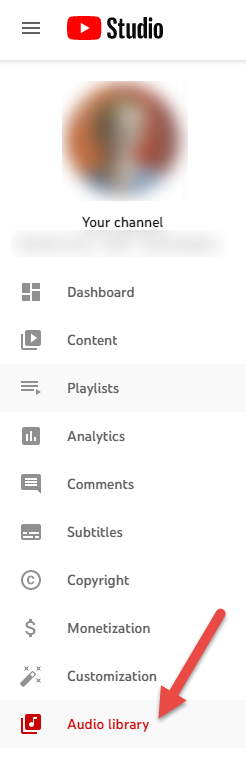
YouTube Studio menu on left side with arrow pointing to the Audio Library at the bottom.

Did you know that YouTube now has a Creative Commons filter and a YouTube Audio Library? It does! You can search for music to use however you want to simply by going to the Audio Library and searching. You’ll find the Audio Library link on the left side of your YouTube Studio page at the bottom.

So many folks use the audio from a YouTube video for whatever they want to. This goes against YouTube’s terms of service. If you want to use music from YouTube you need to use the Audio Library and the Creative Commons filter instead.

There are so many reasons why you should honor copyright. The least of which is that it’s the law! But artists earn their living by writing, recording, and performing songs. Their livelihood depends on your ethical behavior. Just because you can, doesn’t mean you should!

There are many resources out there to provide you with more information about music copyright and ethical use. If you are an educator, particularly, this is a great resource from the National Association for Music Education (NAfME) – Copyright Session: https://nafme.org/wp-content/uploads/2014/05/Basics-of-Copyright-Session-2017-Updated.pdf

The next time you plan to use music in a presentation, as a backdrop to a public event or on your website please do your homework and find Creative Commons or Public Domain music that works. Or better yet, maybe you should commission a student or educator to write one for you! ~B

Reducing Stress in a Stressful Environment

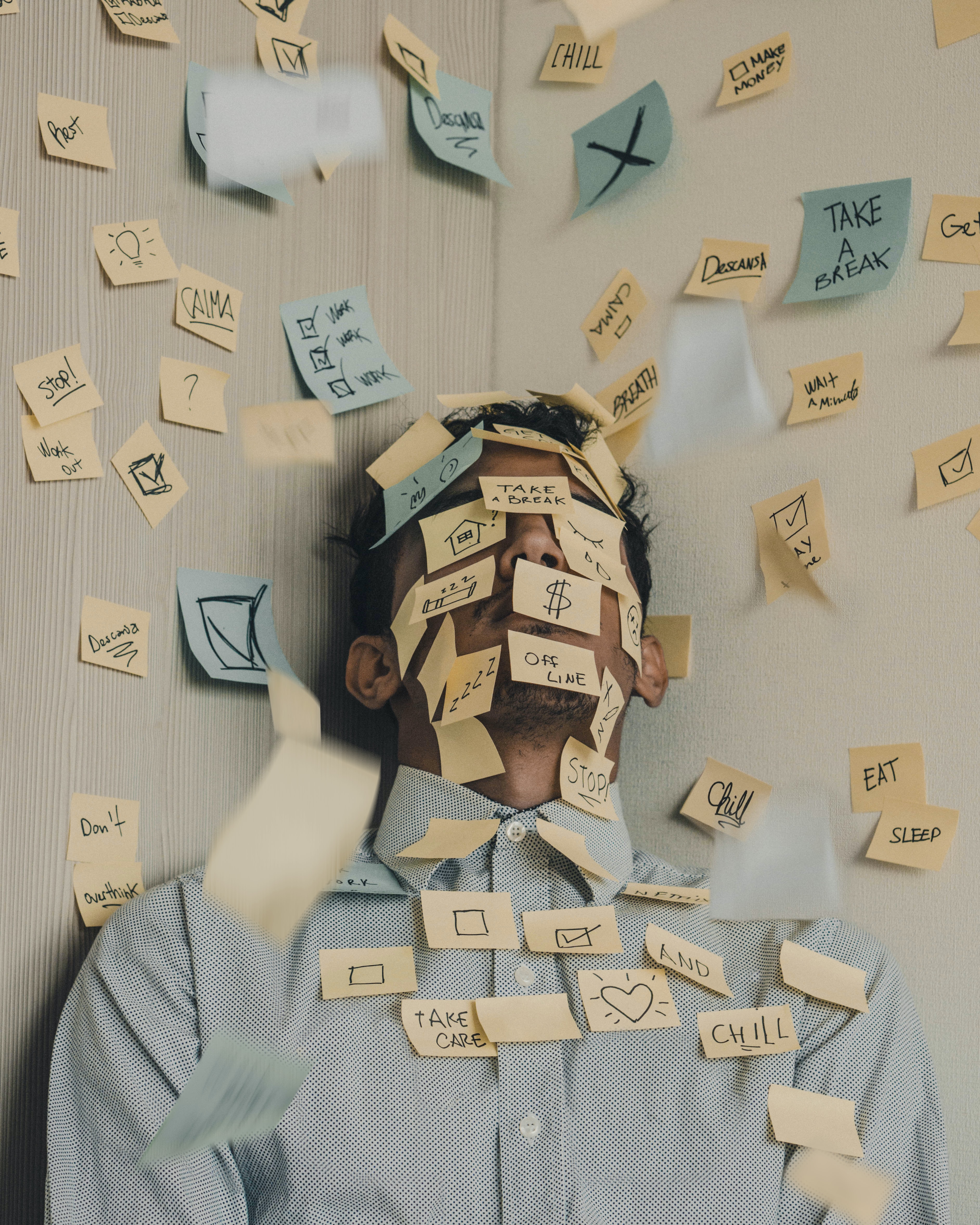
Stressful. No, that is not the #OneWord22 that I chose this year, but that certainly describes the state of things right now, doesn’t it?! It seems that just about every conversation, interaction, or even just life, in general, is stressful right now. Have you experienced stress more than usual lately? Work stress. COVID stress. Travel stress. Even grocery shopping stress. Heavy sigh.

Don’t let the stress take your joy away. Just breathe. Stop for a moment. Take a deep breath through your nose and slowly release it through your mouth. Did you do that just now? If not, I’ll wait. And I’ll breathe deeply, too.

Do you even realize that you are stressed? Or is it only when your shoulders are tight and you have a headache at the end of the day that you acknowledge that you’ve been holding all that stuff in your shoulders and neck? Hopefully, you just moved your shoulders and released some of the stress hiding there.

Am I good at de-stressing? Not all the time. Okay, maybe not even some of the time. I get working and forget to get up and move away from the desk, or table, or wherever I’ve landed to work at the time. I work in multiple different schools and locations, so getting up and doing some kind of gyrating, stress-relieving dance doesn’t really go over too well. Dancing in my vehicle when driving is kind of a problem, as well. Although that doesn’t always stop me!

So what is the solution? That will be different for you than it is for me, but here are a few of my strategies.

Set a basic routine and stick to it. Get up at the same time so that you don’t feel rushed in the morning. Seems simple, but a lot of us keep hitting the snooze button and then have to rush around to get ready. Me included. So I set my alarm 30 minutes earlier and give myself permission to hit the snooze button a few times. Then I set another alarm just in case I shut off the first one. No sense stressing over whether I’m going to sleep through the alarm!

My morning routine consists of doing the same basic things in any order I want to. But coffee always comes first for me. Even if I don’t drink it right then, I make it and go about my business. I use the same two travel mugs for my water. I prep my lunch a few days ahead for grab-and-go food that I don’t have to think about. Clean my glasses. Put in eyedrops. Have a protein-filled breakfast – always.

Am I a creature of habit? Well, I’m much less stressed when my habits are consistent. I put things in the same basic location(s) so I’m not running around stressing over where they are. I try to start my day at the same time when possible.

If this sounds too restrictive for you, that’s okay. Maybe this stresses you out more! Find what consistencies work for you. Try to include some time to step away from your tasks and schedule some time with You. Deep breathe. Stretch. Walk around. Dance. Listen to positive messages in music or online. Take control of what you can and let go of what you can’t.

There are some apps that you can rely on as well. While that isn’t one of my strategies at this time, I’ve used them in the past and with students and teachers alike. Here is a list of 10 calming apps that you might find helpful: https://www.creativeboom.com/resources/10-calming-apps-to-help-you-beat-stress-and-feel-more-relaxed/

No matter what your calming space or time looks like, be mindful of taking that time for yourself. We are all stressed. I’d love to hear your strategies for a calmer life, too. Just comment on this post. Oh, and follow my Mother’s advice “Make sure you drink your water and eat your vegetables”. ~B

A Blustery Monday After Vacation: A Teacher’s View

It’s always difficult to return to work after a vacation. Especially a long vacation. Especially one where you unplugged, destressed, and slept until, well, let’s just say later than one should. The rude awakening to “back to work” was exacerbated with howling winds, heavy rain, and an overall gloomy start to the day. Ugh.

Photo by Tengyart on Unsplash

Today was especially difficult because I had trouble falling asleep last night. Something that is very rare for me. So when 3:30 AM arrived and sleep was still elusive, I had almost resigned myself to just staying up all night. But the sleep hit me over the head at 3:45 – so my Fitbit tells me – and the 6:30 AM alarm really was a rude awakening.

I can’t believe that I couldn’t sleep! But, truthfully, I was thinking about getting back to work. Getting back to doing what I love. Being on a schedule. Connecting with my colleagues. Figuring out new challenges and handling the old ones.

I crave structure. While I loved my two weeks off, I need purpose. I really didn’t think about work hardly at all for two weeks. I even stopped doing some of my routine things around the house. My sourdough starter didn’t get fed for half of the break. (Don’t worry, he’s fine!) I didn’t schedule any big projects to DIY. Due to concerns about staying healthy, I didn’t really go anywhere. No lunch dates with friends. No holiday parties. A low-key kinda time.

Just what my mind and body needed.

Although it looked and sounded like the end of the world was near this early Monday morning after a restful vacation, the routines and schedules have returned. Email notifications are back on. Cleaning up unfinished business from before break and starting new projects that have deadlines have me ready for what lies ahead.

I just flipped my daily inspirational calendar to today’s date and saw this:

“Life is full of challenges and problems for which solutions need to be found. Rather than looking at that as a negative, look at it positively – as an exciting daily opportunity!”

Richards, Jessie, and M.S. Fontaine. 101 Mottos for Success. Switzerland, Aurora Production AG, 2013.

Truth! So, even though it’s a rainy day AND a Monday AND the first day back after vacation, I’m grateful that I have a job I love and the structure I crave. I’m blessed to work with amazing, creative, knowledgeable people. And I’ll continue to look for solutions to the everyday issues of life. Guess I’ll have to create my own sunshine! ~B

Using Tech as a Tool – Necessary?

The latest and greatest tech shows up. If you’re like I am, you are curious to see if it’s better than something you already use or different in the way it approaches a problem. Maybe it has lots of “bells and whistles”. Maybe the interface looks great. Whatever the reason, discovering new tech can be exciting and almost heady as we explore some great new apps or software.

What is the reason for using the new tech? Is it just because it’s shiny and new? Or does it really have a purpose that will greatly improve your life or the life of your students?

My job is the help teachers and staff learn to use technology in a way that supports their curriculum and enhances their teaching and learning. Sometimes the needs are obvious – “How do I?…” or “I can’t seem to get it to…”. These statements have simple answers (usually!) Yet how do you help someone who doesn’t even know the question to ask?

Like any sound educational practice, looking at the ‘Why?’ behind the use of technology is a great place to start. We set goals and objectives for our students. We determine a standard of what needs to be taught. Why don’t we do the same for teaching adults to integrate software into their teaching? Maybe you already do. I certainly try to do this!

Time Management
“Time Management” by danielfoster437 
is licensed under CC BY-NC-SA 2.0

My “Why” for teaching teachers has many facets. Each teacher is different, yet each teacher should exhibit the same end goal. Something that is best for students. The “customers” are our students. They deserve to have an engaging education and that must involve various forms of technology. They have grown up in a tech world. They are easily bored. Rather than just throwing the tech at them for the WOW factor, we need to be encouraging them to utilize the tech as a tool. A stepping stone to get to the skills they need to get employed. And it has to start in Kindergarten. If we wait until fourth or fifth grade, we have waited too long.

Technology can open the world of creativity for students. They can use it to collaborate with others globally, to be self-motivated, to set deadlines and personal goals. But only if we teach them how to do that. We can’t ever assume that students, or teachers, have already mastered self-discipline, time management, collaboration, or communication. In other words, teaching soft skills.

While I’m not a fan of the term soft skills, it is used with regularity in the business world. What are soft skills? Will Kenton describes soft skills in this way:

Soft skills are character traits and interpersonal skills that characterize a person’s relationships with other people. In the workplace, soft skills are considered to be a complement to hard skills, which refer to a person’s knowledge and occupational skills. Sociologists may use the term soft skills to describe a person’s emotional intelligence quotient (EQ) as opposed to intelligence quotient (IQ).

Soft skills have more to do with who people are, rather than what they know. As such, they encompass the character traits that decide how well one interacts with others and usually are a definite part of an individual’s personality. In a competitive labor market, employees who demonstrate they have a good combination of hard and soft skills often see a greater demand for their services.

Soft Skills. (2021). Investopedia. https://www.investopedia.com/terms/s/soft-skills.asp

Quarantine taught us a lot about the lack of self-discipline. Both the self-discipline of our students and the self-discipline of ourselves. I’m a scheduled person. I thrive when I have my calendar completely organized well in advance of dates. I organized calendars for my family and manage multiple calendars. I like this. Many people don’t. It makes me calm and helps me plan. I still manage to miss or arrive late to meetings, but then it’s my own fault for not allowing enough time. I do that a lot. Time fleets.

Soft skills became a necessary thing to acquire for students and teachers thrust into learning from home. Some learned it. Sadly, many did not. But don’t underestimate your students! They are quite resourceful if you let go of the control just a little bit. They become motivated when it’s something they want to learn.

So back to technology tools. Tool training is important, but not for the reason you might think. Tool training is important because it is the foundation to get to the end goal. It’s not about the tool. For example, you can’t build a house unless you know how to use a ruler, a saw, and a hammer at the very least. So learning how to use the tools matters. Over time you learn the nuances and tricks of the trade with those tools. Just like software.

Start with your “Why?”. Don’t be afraid to collaborate with someone to test things out. Build the capacity of your students and colleagues by sharing what you learn, what you create, and how you do things. No one has all of the answers, but getting some tool training can help you to be more productive, innovative and lead the way for your students to thrive. ~B

Perseverance in Trying Times

The world is certainly a precarious place these days. Working for a public school brings up a host of emotions every single day. Am I a valued employee? Is what I do making a difference? Even though I want better pay, isn’t the satisfaction of a job well done part of what I signed up for?

So many things have changed in education over the pandemic years. Online has more validity than before. Blended learning (a combination of face-to-face and “flipped learning” done at home) is better understood. Students overall have learned to navigate the digital world. But is all of that enough?

Tired. Overworked. Afraid. Anxious. Worried. Angry. Did I mention tired?!?

Caring about students and teachers doesn’t pay the bills. With rising costs of everything and no pay raises, one can’t help but wonder if this is worth it. Could I do something else? Should I take that higher paying job and step into the unknown?

Maybe. But then again, students don’t have that choice. Students in a public school come to the building with a need for support, trust, and skills. We signed up for that. I signed up for that.

Getting weary from “fighting the good fight” is normal. The external pressures in a pandemic aren’t normal. But they’re real. The negative comments, the taking of sides based on a belief, and the constant barrage of new rules can take a toll on adults. But it affects kids in a more profound way. They are looking to us to lead the way. They want reassurance that we will rise above the petty, divisive cultural mayhem that has ensued. They need us to have level heads.

Does it get to me? You bet. Do I sometimes want to quit my job and move far away and live off the land? Yes. (But only if I can take my tech with me!) Do I literally cry out with frustration at the state of things? Sadly, yes.

But hope always exists. The smile on a child’s face when they realize you care about them. The gratitude of the overworked teacher when you move alongside them and lift the burden. The realization that we are all in this together regardless of how we approach it. Those things make it worthwhile.

Find your moment. Find your smile. Never give up on the possibilities of those around you. And take time to reflect on what really matters to you. Continue to persevere.

I know I sound idealistic. Yet I can’t help but think that we can make every day better if we only choose it. Choose kindness over pettiness. Choose hope over despair. Choose the common good over selfishness. Choose to live each day with purpose.

Tired? Yup. Financially burdened? Yup. Blessed beyond belief? You bet. It’s all in your perception of what truly matters. You matter. ~ B

A Letter to Educators

Teaching is hard. Not the actual teaching part of it. The planning, designing, orchestrating, thinking and delivering is the hard part. Good teaching takes a lot of work in the background that only educators understand. Great teaching means other things get sacrificed in your life. Time with you family can be reduced. Ability to just sit and relax (what’s that?!?) can be non-existent. Often educators have a second or third part time job just to try to pay the bills.

Non-educators might have gotten a better idea of what it means to be a teacher when we shuttered our schools and students were learning from home. Many families began praising teachers and thanking them for the work they’ve always done. This is greatly appreciated. Now if only that could translate to income! Just kidding. Kind of.

Educators didn’t go into the profession to get rich, or even to earn a livable wage. While it SHOULD support a family, the reality is that it doesn’t. We became teachers because we believe in people. We believe in growing a young human into a better one. We want the best for every single one of those children and young adults. For those of us that teach adults, we want what’s best for them too.

By now you might be nodding your head and thinking, “Yes! That’s what I want!” But, you’re tired. You’re stressed. Maybe you’re even a little fearful in the environment that we find ourselves in right now. It’s hard to find joy in things when everything seems different and maybe even scary.

So, what to do? How do educators manage to survive?

I know that I don’t have all the answers. Nor do I even have the right answers for you. You need to find the right answers that fit your situation. But, I DO know that we need to provide self-care and find the good where we can. I DO know that it’s hard. I DO know that we can’t always change our circumstances, but we can change our attitude about them.

I have needed an attitude change. I have to remind myself daily to stay positive, remember the goal of education, and give my best every day. Even if it’s not 100% some days, it’s still my best for that day. Tomorrow is a new day. Tomorrow I might have less to give, but I’ll still give as much of me as I can. With grace, I might even be able to give 100%. But that’s never a given.

Give yourself grace. Remind yourself that you never know how you might affect someone you meet, or work with today. Shine your light brightly. Thank you for being an educator and know that you make a difference. 🎹 BV

What I’ve Learned from Teleworking

Working from home for the last 12 months has been an interesting study in resilience. My office space has become a place for huge productivity. I have learned to work with multiple devices on multiple platforms and keep a very tight schedule. Previously, I traveled locally between schools to handle my job. Now I can literally move from one school to another in 5 seconds. Efficiency has increased exponentially.

I am able to structure my workday easily now. I have alarms set to make sure I handle all of my deadlines. I rarely get off task – except when I need to in order to mentally survive the challenges I face in front of the screen.

Do I like teleworking? Yes! Mostly because I’m far more productive than before. I am spending less time driving. The relaxation of driving is something I do miss, but I am a better employee and using school district money better when my commute is 10 steps away behind a sound dampening curtain.

Virtual conferences are challenging in this environment. I’ve attended and/or presented at 4 virtual conferences this year. But, I didn’t take time off from work to do that. I continued to work and assist teachers because they are my first priority. Always. The challenge that presented was the inability to really learn well while trying to facilitate learning for others. Very stressful.

I’ve also learned that one can bake bread around a very busy work schedule. Instead of taking a lunch break, I take a baking break. (Sourdough anyone?) Doing something for others has helped me keep my sanity during this time, too.

I have worked with many more teachers and administrators this year than ever. They are willing to schedule an appointment and just jump into a Google Meet to help solve problems, answer questions and strategize the best ways to assist their staff. We have definitely learned to work smarter as well as harder.

I do love to be around real people. But, would I keep teleworking if given the option? You bet. It has been a stressful year, yet I now know that we are all able to function in an online environment if needed. Soon I’ll be back in schools – next week – so we can expect my productivity to take a huge nosedive. No extra screens. Building in time for travel that amounts to a minimum of about an hour of my workday.

Here’s to all of my fellow virtual colleagues!