Teaching Artificial Intelligence in Education: A Look Inside My Online Course

Image generated with AI

I’m thrilled to share a bit about my online course, “Artificial Intelligence in Education,” which explores the exciting intersection of artificial intelligence and the future of learning. This course is designed for educators, administrators, and anyone passionate about leveraging AI’s potential to transform the educational landscape. It’s a journey through the core concepts of AI, practical tools, ethical considerations, and culminates in a personalized action plan and final project. Let’s take a peek inside each module:

Module 1: Introduction to Artificial Intelligence

We kick things off with the fundamentals. What is AI, really? This module demystifies the jargon and introduces key concepts like machine learning, natural language processing, and computer vision. We explore the history of AI, discuss its current applications beyond education, and lay the groundwork for understanding how these technologies can be applied in the classroom. Think of this as your AI 101 – no prior technical knowledge required! We focus on building a solid understanding of the core principles before diving into specific applications.

Module 2: AI Tools for Teaching and Learning

This is where the rubber meets the road! Module 2 is all about exploring practical AI tools that educators can use right now. We delve into AI-powered platforms for personalized learning, automated grading, content creation, and more. Participants get hands-on experience with different tools, evaluating their strengths and weaknesses, and considering how they can best integrate them into their teaching practices. From AI-driven tutoring systems to tools that help generate lesson plans, this module is packed with actionable strategies and resources.

Module 3: Ethical Considerations in AI

With great power comes great responsibility. As we explore the potential of AI in education, it’s crucial to address the ethical implications. This module tackles important questions surrounding bias in algorithms, data privacy, the potential impact on student equity, and the future of human interaction in learning. We engage in thoughtful discussions and explore frameworks for responsible AI implementation in education. This module ensures we’re not just using AI, but using it ethically and thoughtfully.

Module 4: Developing your Action Plan

Armed with knowledge of AI concepts, practical tools, and ethical considerations, participants begin crafting their own personalized action plans. This module guides them through the process of identifying a specific challenge or opportunity in their educational context and developing a plan for leveraging AI to address it. We provide templates, resources, and feedback to help participants create actionable and realistic plans they can implement after the course. This is about turning theory into practice and creating a tangible roadmap for change.

Module 5: Designing and Presenting the Final Project

The culmination of the course! Participants bring their action plans to life by developing and presenting a final project. This could involve creating a prototype of an AI-enhanced learning activity, designing a professional development workshop on AI for colleagues, or developing a comprehensive implementation strategy for their school or district. This module provides support and feedback as participants refine their projects and prepare to share their work with the cohort. It’s a chance to showcase their learning and contribute to the growing conversation around AI in education.

This online course is more than just learning about AI; it’s about empowering educators to become leaders in the AI revolution. I’m incredibly excited to guide participants on this journey and see the innovative ways they will use AI to enhance teaching and learning. If you’re interested in learning more, please don’t hesitate to reach out! I’d love to answer any questions you have. To register for this course, go to the New England Institute for Teacher Education website.

Reducing Stress in a Stressful Environment

Stressful. No, that is not the #OneWord22 that I chose this year, but that certainly describes the state of things right now, doesn’t it?! It seems that just about every conversation, interaction, or even just life, in general, is stressful right now. Have you experienced stress more than usual lately? Work stress. COVID stress. Travel stress. Even grocery shopping stress. Heavy sigh.

Don’t let the stress take your joy away. Just breathe. Stop for a moment. Take a deep breath through your nose and slowly release it through your mouth. Did you do that just now? If not, I’ll wait. And I’ll breathe deeply, too.

Do you even realize that you are stressed? Or is it only when your shoulders are tight and you have a headache at the end of the day that you acknowledge that you’ve been holding all that stuff in your shoulders and neck? Hopefully, you just moved your shoulders and released some of the stress hiding there.

Am I good at de-stressing? Not all the time. Okay, maybe not even some of the time. I get working and forget to get up and move away from the desk, or table, or wherever I’ve landed to work at the time. I work in multiple different schools and locations, so getting up and doing some kind of gyrating, stress-relieving dance doesn’t really go over too well. Dancing in my vehicle when driving is kind of a problem, as well. Although that doesn’t always stop me!

So what is the solution? That will be different for you than it is for me, but here are a few of my strategies.

Set a basic routine and stick to it. Get up at the same time so that you don’t feel rushed in the morning. Seems simple, but a lot of us keep hitting the snooze button and then have to rush around to get ready. Me included. So I set my alarm 30 minutes earlier and give myself permission to hit the snooze button a few times. Then I set another alarm just in case I shut off the first one. No sense stressing over whether I’m going to sleep through the alarm!

My morning routine consists of doing the same basic things in any order I want to. But coffee always comes first for me. Even if I don’t drink it right then, I make it and go about my business. I use the same two travel mugs for my water. I prep my lunch a few days ahead for grab-and-go food that I don’t have to think about. Clean my glasses. Put in eyedrops. Have a protein-filled breakfast – always.

Am I a creature of habit? Well, I’m much less stressed when my habits are consistent. I put things in the same basic location(s) so I’m not running around stressing over where they are. I try to start my day at the same time when possible.

If this sounds too restrictive for you, that’s okay. Maybe this stresses you out more! Find what consistencies work for you. Try to include some time to step away from your tasks and schedule some time with You. Deep breathe. Stretch. Walk around. Dance. Listen to positive messages in music or online. Take control of what you can and let go of what you can’t.

There are some apps that you can rely on as well. While that isn’t one of my strategies at this time, I’ve used them in the past and with students and teachers alike. Here is a list of 10 calming apps that you might find helpful: https://www.creativeboom.com/resources/10-calming-apps-to-help-you-beat-stress-and-feel-more-relaxed/

No matter what your calming space or time looks like, be mindful of taking that time for yourself. We are all stressed. I’d love to hear your strategies for a calmer life, too. Just comment on this post. Oh, and follow my Mother’s advice “Make sure you drink your water and eat your vegetables”. ~B

Using Tech as a Tool – Necessary?

The latest and greatest tech shows up. If you’re like I am, you are curious to see if it’s better than something you already use or different in the way it approaches a problem. Maybe it has lots of “bells and whistles”. Maybe the interface looks great. Whatever the reason, discovering new tech can be exciting and almost heady as we explore some great new apps or software.

What is the reason for using the new tech? Is it just because it’s shiny and new? Or does it really have a purpose that will greatly improve your life or the life of your students?

My job is the help teachers and staff learn to use technology in a way that supports their curriculum and enhances their teaching and learning. Sometimes the needs are obvious – “How do I?…” or “I can’t seem to get it to…”. These statements have simple answers (usually!) Yet how do you help someone who doesn’t even know the question to ask?

Like any sound educational practice, looking at the ‘Why?’ behind the use of technology is a great place to start. We set goals and objectives for our students. We determine a standard of what needs to be taught. Why don’t we do the same for teaching adults to integrate software into their teaching? Maybe you already do. I certainly try to do this!

Time Management
“Time Management” by danielfoster437 
is licensed under CC BY-NC-SA 2.0

My “Why” for teaching teachers has many facets. Each teacher is different, yet each teacher should exhibit the same end goal. Something that is best for students. The “customers” are our students. They deserve to have an engaging education and that must involve various forms of technology. They have grown up in a tech world. They are easily bored. Rather than just throwing the tech at them for the WOW factor, we need to be encouraging them to utilize the tech as a tool. A stepping stone to get to the skills they need to get employed. And it has to start in Kindergarten. If we wait until fourth or fifth grade, we have waited too long.

Technology can open the world of creativity for students. They can use it to collaborate with others globally, to be self-motivated, to set deadlines and personal goals. But only if we teach them how to do that. We can’t ever assume that students, or teachers, have already mastered self-discipline, time management, collaboration, or communication. In other words, teaching soft skills.

While I’m not a fan of the term soft skills, it is used with regularity in the business world. What are soft skills? Will Kenton describes soft skills in this way:

Soft skills are character traits and interpersonal skills that characterize a person’s relationships with other people. In the workplace, soft skills are considered to be a complement to hard skills, which refer to a person’s knowledge and occupational skills. Sociologists may use the term soft skills to describe a person’s emotional intelligence quotient (EQ) as opposed to intelligence quotient (IQ).

Soft skills have more to do with who people are, rather than what they know. As such, they encompass the character traits that decide how well one interacts with others and usually are a definite part of an individual’s personality. In a competitive labor market, employees who demonstrate they have a good combination of hard and soft skills often see a greater demand for their services.

Soft Skills. (2021). Investopedia. https://www.investopedia.com/terms/s/soft-skills.asp

Quarantine taught us a lot about the lack of self-discipline. Both the self-discipline of our students and the self-discipline of ourselves. I’m a scheduled person. I thrive when I have my calendar completely organized well in advance of dates. I organized calendars for my family and manage multiple calendars. I like this. Many people don’t. It makes me calm and helps me plan. I still manage to miss or arrive late to meetings, but then it’s my own fault for not allowing enough time. I do that a lot. Time fleets.

Soft skills became a necessary thing to acquire for students and teachers thrust into learning from home. Some learned it. Sadly, many did not. But don’t underestimate your students! They are quite resourceful if you let go of the control just a little bit. They become motivated when it’s something they want to learn.

So back to technology tools. Tool training is important, but not for the reason you might think. Tool training is important because it is the foundation to get to the end goal. It’s not about the tool. For example, you can’t build a house unless you know how to use a ruler, a saw, and a hammer at the very least. So learning how to use the tools matters. Over time you learn the nuances and tricks of the trade with those tools. Just like software.

Start with your “Why?”. Don’t be afraid to collaborate with someone to test things out. Build the capacity of your students and colleagues by sharing what you learn, what you create, and how you do things. No one has all of the answers, but getting some tool training can help you to be more productive, innovative and lead the way for your students to thrive. ~B

Perseverance in Trying Times

The world is certainly a precarious place these days. Working for a public school brings up a host of emotions every single day. Am I a valued employee? Is what I do making a difference? Even though I want better pay, isn’t the satisfaction of a job well done part of what I signed up for?

So many things have changed in education over the pandemic years. Online has more validity than before. Blended learning (a combination of face-to-face and “flipped learning” done at home) is better understood. Students overall have learned to navigate the digital world. But is all of that enough?

Tired. Overworked. Afraid. Anxious. Worried. Angry. Did I mention tired?!?

Caring about students and teachers doesn’t pay the bills. With rising costs of everything and no pay raises, one can’t help but wonder if this is worth it. Could I do something else? Should I take that higher paying job and step into the unknown?

Maybe. But then again, students don’t have that choice. Students in a public school come to the building with a need for support, trust, and skills. We signed up for that. I signed up for that.

Getting weary from “fighting the good fight” is normal. The external pressures in a pandemic aren’t normal. But they’re real. The negative comments, the taking of sides based on a belief, and the constant barrage of new rules can take a toll on adults. But it affects kids in a more profound way. They are looking to us to lead the way. They want reassurance that we will rise above the petty, divisive cultural mayhem that has ensued. They need us to have level heads.

Does it get to me? You bet. Do I sometimes want to quit my job and move far away and live off the land? Yes. (But only if I can take my tech with me!) Do I literally cry out with frustration at the state of things? Sadly, yes.

But hope always exists. The smile on a child’s face when they realize you care about them. The gratitude of the overworked teacher when you move alongside them and lift the burden. The realization that we are all in this together regardless of how we approach it. Those things make it worthwhile.

Find your moment. Find your smile. Never give up on the possibilities of those around you. And take time to reflect on what really matters to you. Continue to persevere.

I know I sound idealistic. Yet I can’t help but think that we can make every day better if we only choose it. Choose kindness over pettiness. Choose hope over despair. Choose the common good over selfishness. Choose to live each day with purpose.

Tired? Yup. Financially burdened? Yup. Blessed beyond belief? You bet. It’s all in your perception of what truly matters. You matter. ~ B

A Letter to Educators

Teaching is hard. Not the actual teaching part of it. The planning, designing, orchestrating, thinking and delivering is the hard part. Good teaching takes a lot of work in the background that only educators understand. Great teaching means other things get sacrificed in your life. Time with you family can be reduced. Ability to just sit and relax (what’s that?!?) can be non-existent. Often educators have a second or third part time job just to try to pay the bills.

Non-educators might have gotten a better idea of what it means to be a teacher when we shuttered our schools and students were learning from home. Many families began praising teachers and thanking them for the work they’ve always done. This is greatly appreciated. Now if only that could translate to income! Just kidding. Kind of.

Educators didn’t go into the profession to get rich, or even to earn a livable wage. While it SHOULD support a family, the reality is that it doesn’t. We became teachers because we believe in people. We believe in growing a young human into a better one. We want the best for every single one of those children and young adults. For those of us that teach adults, we want what’s best for them too.

By now you might be nodding your head and thinking, “Yes! That’s what I want!” But, you’re tired. You’re stressed. Maybe you’re even a little fearful in the environment that we find ourselves in right now. It’s hard to find joy in things when everything seems different and maybe even scary.

So, what to do? How do educators manage to survive?

I know that I don’t have all the answers. Nor do I even have the right answers for you. You need to find the right answers that fit your situation. But, I DO know that we need to provide self-care and find the good where we can. I DO know that it’s hard. I DO know that we can’t always change our circumstances, but we can change our attitude about them.

I have needed an attitude change. I have to remind myself daily to stay positive, remember the goal of education, and give my best every day. Even if it’s not 100% some days, it’s still my best for that day. Tomorrow is a new day. Tomorrow I might have less to give, but I’ll still give as much of me as I can. With grace, I might even be able to give 100%. But that’s never a given.

Give yourself grace. Remind yourself that you never know how you might affect someone you meet, or work with today. Shine your light brightly. Thank you for being an educator and know that you make a difference. 🎹 BV

The Problem With New Technology

We’ve all experienced it. The latest and greatest gets released and we think one of two things: “I HAVE to have this!” or “There’s no way they are going to get me to spend my money!”

I’m the latter kind of person. I hang onto phones, computers and cars as long as humanly possible. Does it mean I don’t long for the latest and greatest? Nope. I just am a practical, frugal teacher.

Last year, my beloved Camry that I expected to continue driving until well after I paid it off was struck from behind and totaled. I wanted to buy another Camry, but somehow the dealer convinced me to try a Kia Cadenza. “Does it fit a 10 foot board?”, I queried. “Seats don’t fold down, but there is a pass through.” I told him I’d bring it back if the boards wouldn’t fit. They fit. I was sold.

Now comes the latest dilemma: the new iPhones are out. My older iPhone 7 is acting up. Won’t install apps. Doesn’t raise to wake anymore. Refuses to do the simplest of tasks. My phone has plenty of memory. I’ve ditched a lot of apps that I just don’t use. I’ve tried everything I can think of. But still, it’s old technology. And Apple knows it.

Oh, Apple, how you know your market! The newest iPhone 11 comes in at the amazing price of $699.99. While still more money than this old Yankee really wants to spend, it’s still less than what I paid for the current phone I have. And the technology is SO much better!

Don’t even think to ask me if I’ve considered an Android. I won’t. I’m an Apple user tried and true. (Mostly!) My devices integrate seamlessly – except my work laptop which still plays well with them in the Cloud environment.

So what is my problem? My problem with new technology is that I just want my old technology to work. Just plain work. Not planned obsolescence. Not forcing me to upgrade. Not MAKING me do anything!

Alas, my job as a Digital Learning Coordinator requires me to have instant access to everything. Could I function without a phone? Maybe, but it wouldn’t be pretty! I rely on this little device that I use for just about everything. I even occasionally make phone calls. And while I’m not proud of my need for this, it truly has become part of my life. For better or for worse.

I have fought the urge. I have even talked myself out of a new phone several times. I acquiesced and went with my husband to sit at the store to look at new phones. But I didn’t make the move until today. Today the inability to download a necessary piece of financial software pushed me over the edge. I have officially caved.

My new iPhone 11 will be here shortly. Budget blown. But, problem solved. 😎

Aspirations and Inspirations

Tonight I spent two plus hours on an amazing webinar with Seth Mosley of Centricity Publishing who is “one of the most awarded and in-demand songwriters and producers in the Christian Music industry.” It struck me how important it is to teach others about our craft – no matter what that craft is – in order to fuel the world. Seth and his team were inspiring and encouraging about songwriting for people of all ages and abilities.

Why was I taking part in a webinar about songwriting? Because I’ve been a songwriter since I was a pre-teen. I have never done much with my songs, and I haven’t written much in recent years, but it is something that I have always done. A few of my songs have been performed and a couple have been recorded semi-professionally but that’s not what’s really important. What’s really important is that songwriting has always been a part of me. It is part of who I am.

I don’t think that I’ll ever become a famous songwriter. Mostly because I’m not willing to dedicate the time that it takes. At least not right now. Maybe I will feel compelled or driven or inspired to write more purposefully someday soon.

However, for some reason this week I needed a little more inspiration for my aspiration. I needed a confirmation that what I have done for joy and creativity isn’t just something to keep tucked away in multiple binders in my piano room. So I signed up for this webinar and I’m glad I did.

While I am not ready to revisit my previous songs right now, I want to think about my reasons for writing music. I want to understand why I write songs. I know I write best when there is something emotional going on. Thankfully, my life is not in emotional turmoil and hasn’t been for a number of years now. Maybe that’s why my songs are tucked away.

I love performing music. Thankfully, I have that opportunity every week by playing and singing on a Worship Team. I also love teaching private piano to my small number of students. It is somehow gratifying to know that while none of them will become a concert pianist (that’s not my style of teaching!) they will all enjoy playing for the sake of playing. Besides, they are really great kids!

Finding your inspiration for whatever it is that you may be passionate about is so crucial. Where do you find inspiration? What part of your life fulfills you beyond your job? Where do you find joy and creativity in your life? It can be something as simple as a quiet afternoon reading a great book. It can be that toddler that is a whirlwind during the day and looks so angelic asleep. Maybe it’s found in a silent look from the one you love or an amazing trip to a foreign destination.

Whatever your inspiration is, be sure to nurture it. Dream about it. Your aspiration to be or do or experience is just what your heart needs.

I hope to keep growing towards opening my tucked away pages again soon. Maybe I’ll even begin something new tonight. But this aspiration reminds me that I need to be the inspiration for all of the educators that I come in contact with. I might not need to teach them much more than to have confidence in themselves. Just as Seth really did in his webinar tonight. Maybe it’s really that simple.

Thanks for the inspiration, Seth. You have made a difference.

#SongChasers Full Circle Music

What’s In A Title?

I look at the title of my blog and realize that I have written less about tech lately than about life in general. Tech seems somehow too impersonal to write about. I can share the latest gadget, or deal on some new device. But, I find myself wandering into what I really care about: Other people.

30+ years in education has made a profound impact on my life. The teacher and person I was when I began this journey has long faded away. Thank goodness! Those early years of teaching had so many failures. (No one was permanently injured that I’m aware of…)

Now that I work mostly with adults, I hope I convey the compassion that I have for fellow teachers. I understand feeling so tired that there is literally zero left at the end of the day. I understand isolated when you are a specialist and there is no one in your building that shares your struggles.

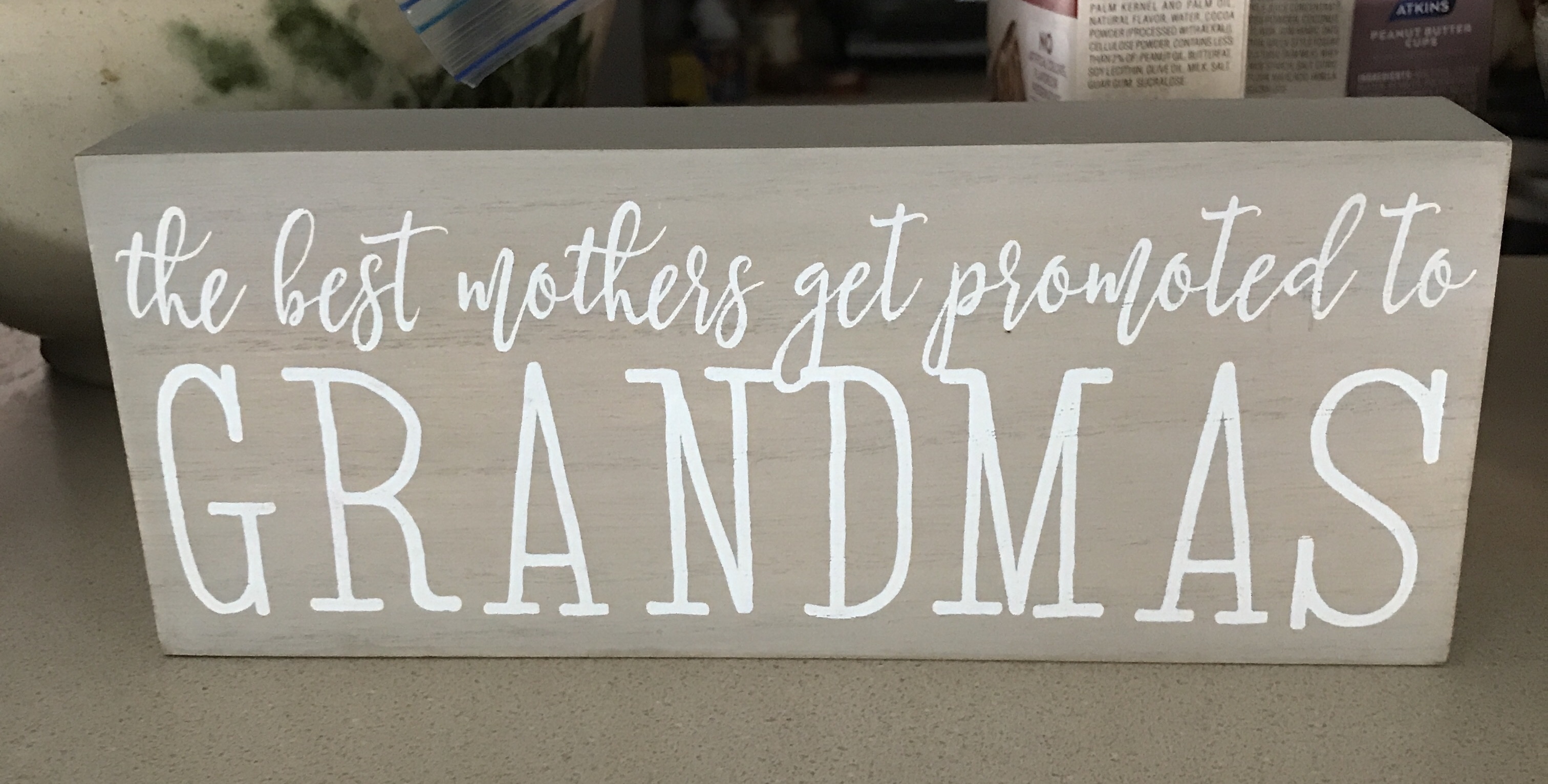
My title is Digital Learning Coordinator. My title is also teacher, facilitator, specialist, Mom, Wife, Daughter, friend and Grandma. Notice what titles come first?!? Why do I identify with what I DO instead of who I am?

Your title brings you a sense of importance, or power, or belonging. But it still can be an empty title if you forget your real purpose. Your real purpose is to care about others and to develop strong family ties. No matter what your family looks like. No matter if your family is your four legged pet or a significant other. Or your church friends or most importantly, yourself.

Work is important. Teaching is extremely important. But living your life caring for others and self is the most important role of all.

What title guides your life? Will your friends remember you for what you did at work, or what you did in life? Or best yet, both of those!

Should I retitle my blog? The title is Vinal Tech Blog. Maybe it should be Something Else? Drop me a line and let me know your thoughts.

Developing Your Personal Best

What is your personal best? Is it cranking out social media posts at all times of the day and night? Is it picking up clothes that someone in your family has left (again) on the floor? Is it finding the perfect app to do the perfect thing?

Whatever your personal best is, let me suggest one thing: balance.

Balance is how you live a full life, work, love and play. It’s finding what’s right for YOU, not for what someone else thinks is right for you. It’s finding joy in working hard, or finding joy in relaxing well. It looks different for each person.

My personal best used to be working multiple jobs (that hasn’t changed!) and sleeping very little. I divided my time between students, a full-time teaching job, church musician jobs, DIY projects at home, and my family. Needless to say, something or someone always got short changed.

So how do you decide? How do you fit it all in?

Maybe I’m not the one to answer this. I’m more busy than most. I love my work. I love my family. I love my home. I don’t get enough sleep. I don’t always have enough left over to be fully present. I don’t have enough money – who does?!? But the reason I think that I have something to offer is that I’ve done it wrong a lot. I’ve failed at it a lot.

You might be thinking, “Okay. So how do I fix it?”

Really evaluate your life. Separate your “work” self from your “home” self. Find a spot in your living space that you can remove yourself to when you need to get something done for work. Try not to do work in your “home” space. Physical separation from what is perceived as work will help gain your balance.

If you can afford to have separate computers or devices for work and for personal use, that is even better. Set your personal one up so that your work email isn’t even accessible on it. Keep your cloud drives separate. Put a game or two on that home device.

Today’s societal pace is every increasing. The demands on your time feel as if you will never, ever get it all done. And maybe you won’t. But by balancing your world, you will slowly find a peace that allows you to do less than 200% so that you can maintain 100% of your life. Slow down. Smell the roses. Don’t feel guilty for spending time doing nothing. And remind me to take my own advice.

#balance #relax #teacherguilt

The Power of Feedback

My new role has been challenging, exciting and full of professional learning. The more I learn the less I know. My mother always told me that I would soon find out that the older I got the more I’d need to learn something new. Wise woman.

I’ve learned to work with a colleague in a give and take situation. Our strengths are different and therefore we are very complimentary (both task wise and verbally!) to each other. We both know when to step up and when to step back. So far I have not managed to break any of her toes!

The challenge of providing professional learning to teachers in schools at multiple grade levels – Elementary, Middle and High – has begun to teach us the skill of differentiating on the fly. Educators are so very busy. When we arrive for training during their planning period or lunch, they don’t let us know that what we are offering isn’t suited to them. They haven’t learned to speak up when we’re there. But some of them definitely speak up in the follow-up survey.

I’ve previously posted about some negative feedback we received, but that was the catalyst for really analyzing what we do and how we do it. The option to get down deeper into what an educator or principal really needs can also be informative for the person leaving the comments. While some might lash out in displeasure, others leave some of the following:

” I understand that when in a training, you have people at all different learning levels but I felt that our training started in the middle and there was so much that could have been introduced, shown to us, etc, to then get us to the middle. I left feeling like I know nothing more that I did before. I did love the convenience of you coming to us instead of us having to take time off to go to a training elsewhere.” However, this same person said the most important takeaway from this session was “I still have a lot to learn”.

So how do we address this in the span of 35 minutes? It has opened our eyes to thinking outside of what typical professional learning looks like. This has started us thinking about choice and voice for our teachers. How do they choose? How do we make that work if they choose 10 different things on the same day? Where do we draw the line? How can we group our tools and offerings so that everyone gets something?

Working with professional educators at all levels makes every day different. We try not to take shortcuts, but give all of our energy every day to provide our best.

Am I still learning? You bet. Sometimes falling short of the mark? You bet. Feeling like I have the best job on the planet for me? You bet. Grateful for those I work with and for? You bet.

I’m so grateful for the feedback that helps me grow, learn and strive to make what I do better each time. I’m not there yet, but maybe I never will be. If I stop learning, then I stop growing.

Bring on the feedback!