Teaching Artificial Intelligence in Education: A Look Inside My Online Course

Image generated with AI

I’m thrilled to share a bit about my online course, “Artificial Intelligence in Education,” which explores the exciting intersection of artificial intelligence and the future of learning. This course is designed for educators, administrators, and anyone passionate about leveraging AI’s potential to transform the educational landscape. It’s a journey through the core concepts of AI, practical tools, ethical considerations, and culminates in a personalized action plan and final project. Let’s take a peek inside each module:

Module 1: Introduction to Artificial Intelligence

We kick things off with the fundamentals. What is AI, really? This module demystifies the jargon and introduces key concepts like machine learning, natural language processing, and computer vision. We explore the history of AI, discuss its current applications beyond education, and lay the groundwork for understanding how these technologies can be applied in the classroom. Think of this as your AI 101 – no prior technical knowledge required! We focus on building a solid understanding of the core principles before diving into specific applications.

Module 2: AI Tools for Teaching and Learning

This is where the rubber meets the road! Module 2 is all about exploring practical AI tools that educators can use right now. We delve into AI-powered platforms for personalized learning, automated grading, content creation, and more. Participants get hands-on experience with different tools, evaluating their strengths and weaknesses, and considering how they can best integrate them into their teaching practices. From AI-driven tutoring systems to tools that help generate lesson plans, this module is packed with actionable strategies and resources.

Module 3: Ethical Considerations in AI

With great power comes great responsibility. As we explore the potential of AI in education, it’s crucial to address the ethical implications. This module tackles important questions surrounding bias in algorithms, data privacy, the potential impact on student equity, and the future of human interaction in learning. We engage in thoughtful discussions and explore frameworks for responsible AI implementation in education. This module ensures we’re not just using AI, but using it ethically and thoughtfully.

Module 4: Developing your Action Plan

Armed with knowledge of AI concepts, practical tools, and ethical considerations, participants begin crafting their own personalized action plans. This module guides them through the process of identifying a specific challenge or opportunity in their educational context and developing a plan for leveraging AI to address it. We provide templates, resources, and feedback to help participants create actionable and realistic plans they can implement after the course. This is about turning theory into practice and creating a tangible roadmap for change.

Module 5: Designing and Presenting the Final Project

The culmination of the course! Participants bring their action plans to life by developing and presenting a final project. This could involve creating a prototype of an AI-enhanced learning activity, designing a professional development workshop on AI for colleagues, or developing a comprehensive implementation strategy for their school or district. This module provides support and feedback as participants refine their projects and prepare to share their work with the cohort. It’s a chance to showcase their learning and contribute to the growing conversation around AI in education.

This online course is more than just learning about AI; it’s about empowering educators to become leaders in the AI revolution. I’m incredibly excited to guide participants on this journey and see the innovative ways they will use AI to enhance teaching and learning. If you’re interested in learning more, please don’t hesitate to reach out! I’d love to answer any questions you have. To register for this course, go to the New England Institute for Teacher Education website.


Using AI In Education

It’s no secret that Artificial Intelligence is everywhere. Amazon shopping. Google Ads. The Classroom. Wait! What? Sure thing, AI has entered education and some are not too happy about that. Kids are “cheating” and having AI write their papers for them.

Maybe it’s not that the kids are cheating, but that educators need to consider a different way to assess what a student knows and is able to do. Back in my day, essays were a thing. Plagiarism existed then, but it just wasn’t as easy to manage. That was a very long time ago, and we’ve evolved. Or at least we should have.

Photo by Michael Dziedzic on Unsplash

I’ve used ChatGPT to give me assistance in formulating emails, laying out coursework, and designing professional-sounding documents. It doesn’t mean that I use the whole thing verbatim (although it IS tempting!) I know a professor who has had AI write entire labs on a science topic. Then he went back and edited it with both correct information as well as adding parts that needed to be there. A real timesaver for a busy educator.

AI is not perfect and not always correct. Designing assignments that help students get at the content in an authentic way can help. Let them try using AI to write something and then have them go back and fact-check things. Have them write a lesson with it to teach to the class. As long as they can explain the whole thing and can easily field questions. There are so many options for using it that don’t constitute cheating.

One of the most significant advantages of AI in education is its ability to provide personalized learning experiences. Traditional classrooms often struggle to meet the diverse learning needs of individual students. AI algorithms analyze the learning patterns and preferences of each student, tailoring educational materials and pacing to match their unique requirements. This ensures that students can learn at their own pace, leading to better understanding and retention of knowledge.

AI-powered Intelligent Tutoring Systems (ITS) act as virtual tutors, offering personalized guidance and support to students. These systems can identify areas where a student is struggling and provide additional resources, practice problems, and explanations to help them grasp difficult concepts. ITS not only enhance students’ understanding but also boost their confidence and motivation to learn.

Educators often find themselves burdened with administrative tasks, such as grading assignments and managing schedules. AI-driven tools can automate these tasks, allowing teachers to focus more on teaching and mentoring students. Automation not only saves time but also ensures greater accuracy and consistency in tasks like grading, enabling teachers to provide more timely and constructive feedback to their students.

AI technology has opened new avenues for inclusive education, especially for students with special needs. AI-powered applications can customize learning materials, offer interactive exercises, and provide real-time feedback, catering to the specific requirements of students with disabilities. This inclusion empowers every student to participate actively in the learning process, fostering a more supportive and accessible educational environment.

AI systems can process vast amounts of data to identify patterns and trends in students’ learning behaviors. By analyzing this data, educators gain valuable insights into the strengths and weaknesses of their teaching methods and the student’s understanding of the subject matter. These data-driven insights enable teachers to make informed decisions, implement targeted interventions, and continuously improve their teaching techniques.

The integration of AI in education is not about replacing teachers but empowering them to provide a more enriching and personalized learning experience for students. By leveraging AI technologies, educators can create a learning environment that caters to the individual needs of each student, fostering a passion for learning and ensuring that no one is left behind.

As AI continues to advance, it is essential for educators, policymakers, and technology developers to collaborate effectively. By embracing the potential of AI in education, we can revolutionize the way knowledge is imparted, paving the way for a brighter and more inclusive future for learners around the world.

OpenAI. (2023). ChatGPT (September 25 Version) [Large language model]. https://chat.openai.com

What’s In Your Digital Toolbelt?

I love to remodel houses. There, I said it. I am the daughter of a handyman/builder who had no sons. I learned the art of deconstruction of an abandoned house on our property, saving boards, and pulling nails so we could reuse them later. I learned the mastery of the “Adjust-O-Matic” (known to most as a sledgehammer) at the ripe old age of 10. These lessons taught me that I needed specific tools for some things, but I could make do with other things that hung on my toolbelt depending on the job.

My digital toolbelt changes depending on what my school district approves, of course. But, I have some digital tools that I use to save time. I have digital tools to be more productive. I have digital tools that just feel right to me. So what’s in your digital toolbelt?

Some of the items I use daily are productivity tools such as ClickUp – a task manager; 1Password for my 1200+ unique passwords; Calendly for ease of others scheduling with me; Grammarly to fix my sloppy typing and somehow less than accurate spelling; Emoji keyboard to enhance my work with visuals and of course the Google Workspace for just about everything.

While these aren’t the only tools I use, they are the ones in my digital toolbelt. The others I have tucked away in my toolbox for when I need them. Chrome extensions such as MyBib for citations, Screencastify for video and audio recording, and the Marvellous Suspender that works in the background and suspends my tabs when I’ve been away from them for a while.

There are many others that I use in my daily work as a Digital Learning Coordinator. Some are used by my school district and have a strict safety policy (thank goodness!) And others that I use exclusively for my home business such as multiple Filemaker databases, accounting software, and scanning software.

Is it time to clean out your digital toolbox? Have some of your tools been a fad and have now evolved or maybe not improved any over the years? I try to simplify my workflow so that I’m not so dependent on one or two tools that if they happen to crash or suddenly not work I won’t be in a panic. Right. That’s easier said than done!

How well do your tools work for you? Maybe it’s time to look for tried and true and realize that the next great thing might seem great, but your standby really gets the job done with the least amount of effort. Spring is here and digital culling might be on the agenda.

What are your favorite tools for your workflow? Why? I’d love to hear your thoughts! ~B

Streaming Music and Copyright

My mind has been buried in Copyright and Fair Use lately. I have always had a bit of a cyber security geek streak in me, to be honest. I know, I know! You’re probably thinking, “Ugh, she’s one of THOSE!”

I want to start out by reminding you that this blog post does not provide legal advice. This is merely to guide you through some of the areas that you may find challenging, provide you with some resources, and remind you to think about your use of streaming music as you navigate through this complex world of copyright.

As educators, it is up to us to model ethical behavior as well as to comply with copyright and fair use guidelines. Our students and other teachers look to us for guidance. The more informed we are about this often confusing topic, the better for everyone.

Music copyright applies to everyone. Maybe you’ve used a recording of a song for an assembly or for a play. Unless you have the proper license in place, you could be breaking copyright.

In 2021 The Music Modernization Act updated the copyright law to make statutory licensing fairer for creators and more efficient for digital music providers. This changed the way musicians get paid for their work that is found on streaming services such as Spotify and iTunes. Prior to this act, much of the digital music was used without permission. Therefore the artists and all others involved in the music industry didn’t get paid for their work. It makes it much fairer for these creators to get paid for their work. Understanding the Music Modernization Act: https://www.copyright.gov

Judy Pancoast – judypancoast.com

I asked Judy Pancoast, an Award Winning Songwriter, and Performer her thoughts on music copyright and why it matters. She said, “As an independent musician, I value my copyrights above all else. Since the advent of streaming music, my income has been measurably depleted to the point where I can’t afford to record in a studio anymore. As recording sales dropped, many independent musicians like myself have been working hard to find alternative income streams, like licensing songs for commercials, TV shows, and movies, creating choral arrangements, and so forth. Therefore, if someone is using my music without paying for it-  using my music in the background at a business (an amusement park did this for many years without paying for it), in a commercial (it happens sometimes at local radio stations), or performing choral versions without a license, that is money right out of my pocket. A lot of people use the excuse “Oh, it’s a big record company, they can afford it,” but I am not a big record company and I pay for everything to do with my career myself. I recently learned that a song I wrote and arranged for a choral group in college, some forty years ago, has been passed down from member to member through the years. Those who have gone on to be music teachers have used my song with their choruses and never paid me a dime. I only found out when someone contacted me and told me they heard it at a funeral in 2019. That’s forty years of income that I’ve missed out on!” 

There are a couple of notable music copyright cases that can be found on this site: https://library.mi.edu/musiccopyright/currentcases Most notably are Robin Thicke & Pharrell Williams v. Marvin Gaye and the one between Roby Orbison and 2 Live Crew. Very interesting reading.

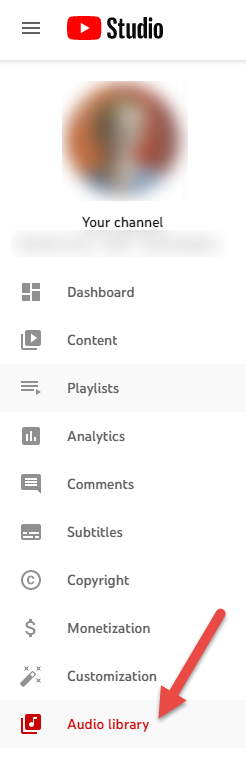
YouTube Studio menu on left side with arrow pointing to the Audio Library at the bottom.

Did you know that YouTube now has a Creative Commons filter and a YouTube Audio Library? It does! You can search for music to use however you want to simply by going to the Audio Library and searching. You’ll find the Audio Library link on the left side of your YouTube Studio page at the bottom.

So many folks use the audio from a YouTube video for whatever they want to. This goes against YouTube’s terms of service. If you want to use music from YouTube you need to use the Audio Library and the Creative Commons filter instead.

There are so many reasons why you should honor copyright. The least of which is that it’s the law! But artists earn their living by writing, recording, and performing songs. Their livelihood depends on your ethical behavior. Just because you can, doesn’t mean you should!

There are many resources out there to provide you with more information about music copyright and ethical use. If you are an educator, particularly, this is a great resource from the National Association for Music Education (NAfME) – Copyright Session: https://nafme.org/wp-content/uploads/2014/05/Basics-of-Copyright-Session-2017-Updated.pdf

The next time you plan to use music in a presentation, as a backdrop to a public event or on your website please do your homework and find Creative Commons or Public Domain music that works. Or better yet, maybe you should commission a student or educator to write one for you! ~B

Using Tech as a Tool – Necessary?

The latest and greatest tech shows up. If you’re like I am, you are curious to see if it’s better than something you already use or different in the way it approaches a problem. Maybe it has lots of “bells and whistles”. Maybe the interface looks great. Whatever the reason, discovering new tech can be exciting and almost heady as we explore some great new apps or software.

What is the reason for using the new tech? Is it just because it’s shiny and new? Or does it really have a purpose that will greatly improve your life or the life of your students?

My job is the help teachers and staff learn to use technology in a way that supports their curriculum and enhances their teaching and learning. Sometimes the needs are obvious – “How do I?…” or “I can’t seem to get it to…”. These statements have simple answers (usually!) Yet how do you help someone who doesn’t even know the question to ask?

Like any sound educational practice, looking at the ‘Why?’ behind the use of technology is a great place to start. We set goals and objectives for our students. We determine a standard of what needs to be taught. Why don’t we do the same for teaching adults to integrate software into their teaching? Maybe you already do. I certainly try to do this!

Time Management
“Time Management” by danielfoster437 
is licensed under CC BY-NC-SA 2.0

My “Why” for teaching teachers has many facets. Each teacher is different, yet each teacher should exhibit the same end goal. Something that is best for students. The “customers” are our students. They deserve to have an engaging education and that must involve various forms of technology. They have grown up in a tech world. They are easily bored. Rather than just throwing the tech at them for the WOW factor, we need to be encouraging them to utilize the tech as a tool. A stepping stone to get to the skills they need to get employed. And it has to start in Kindergarten. If we wait until fourth or fifth grade, we have waited too long.

Technology can open the world of creativity for students. They can use it to collaborate with others globally, to be self-motivated, to set deadlines and personal goals. But only if we teach them how to do that. We can’t ever assume that students, or teachers, have already mastered self-discipline, time management, collaboration, or communication. In other words, teaching soft skills.

While I’m not a fan of the term soft skills, it is used with regularity in the business world. What are soft skills? Will Kenton describes soft skills in this way:

Soft skills are character traits and interpersonal skills that characterize a person’s relationships with other people. In the workplace, soft skills are considered to be a complement to hard skills, which refer to a person’s knowledge and occupational skills. Sociologists may use the term soft skills to describe a person’s emotional intelligence quotient (EQ) as opposed to intelligence quotient (IQ).

Soft skills have more to do with who people are, rather than what they know. As such, they encompass the character traits that decide how well one interacts with others and usually are a definite part of an individual’s personality. In a competitive labor market, employees who demonstrate they have a good combination of hard and soft skills often see a greater demand for their services.

Soft Skills. (2021). Investopedia. https://www.investopedia.com/terms/s/soft-skills.asp

Quarantine taught us a lot about the lack of self-discipline. Both the self-discipline of our students and the self-discipline of ourselves. I’m a scheduled person. I thrive when I have my calendar completely organized well in advance of dates. I organized calendars for my family and manage multiple calendars. I like this. Many people don’t. It makes me calm and helps me plan. I still manage to miss or arrive late to meetings, but then it’s my own fault for not allowing enough time. I do that a lot. Time fleets.

Soft skills became a necessary thing to acquire for students and teachers thrust into learning from home. Some learned it. Sadly, many did not. But don’t underestimate your students! They are quite resourceful if you let go of the control just a little bit. They become motivated when it’s something they want to learn.

So back to technology tools. Tool training is important, but not for the reason you might think. Tool training is important because it is the foundation to get to the end goal. It’s not about the tool. For example, you can’t build a house unless you know how to use a ruler, a saw, and a hammer at the very least. So learning how to use the tools matters. Over time you learn the nuances and tricks of the trade with those tools. Just like software.

Start with your “Why?”. Don’t be afraid to collaborate with someone to test things out. Build the capacity of your students and colleagues by sharing what you learn, what you create, and how you do things. No one has all of the answers, but getting some tool training can help you to be more productive, innovative and lead the way for your students to thrive. ~B

What I’ve Learned from Teleworking

Working from home for the last 12 months has been an interesting study in resilience. My office space has become a place for huge productivity. I have learned to work with multiple devices on multiple platforms and keep a very tight schedule. Previously, I traveled locally between schools to handle my job. Now I can literally move from one school to another in 5 seconds. Efficiency has increased exponentially.

I am able to structure my workday easily now. I have alarms set to make sure I handle all of my deadlines. I rarely get off task – except when I need to in order to mentally survive the challenges I face in front of the screen.

Do I like teleworking? Yes! Mostly because I’m far more productive than before. I am spending less time driving. The relaxation of driving is something I do miss, but I am a better employee and using school district money better when my commute is 10 steps away behind a sound dampening curtain.

Virtual conferences are challenging in this environment. I’ve attended and/or presented at 4 virtual conferences this year. But, I didn’t take time off from work to do that. I continued to work and assist teachers because they are my first priority. Always. The challenge that presented was the inability to really learn well while trying to facilitate learning for others. Very stressful.

I’ve also learned that one can bake bread around a very busy work schedule. Instead of taking a lunch break, I take a baking break. (Sourdough anyone?) Doing something for others has helped me keep my sanity during this time, too.

I have worked with many more teachers and administrators this year than ever. They are willing to schedule an appointment and just jump into a Google Meet to help solve problems, answer questions and strategize the best ways to assist their staff. We have definitely learned to work smarter as well as harder.

I do love to be around real people. But, would I keep teleworking if given the option? You bet. It has been a stressful year, yet I now know that we are all able to function in an online environment if needed. Soon I’ll be back in schools – next week – so we can expect my productivity to take a huge nosedive. No extra screens. Building in time for travel that amounts to a minimum of about an hour of my workday.

Here’s to all of my fellow virtual colleagues!

Musings During Covid 19

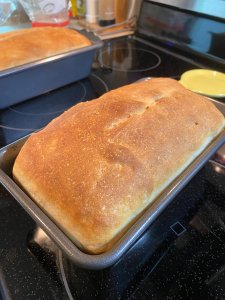
Homemade sourdough bread
Homemade Sourdough Bread

I call these musings because, well, I don’t know what else to term them. I find myself wondering what to write about since I don’t necessarily feel I have anything worth saying. Although if it’s not interesting I guess you can stop here!

One of the things I have found myself doing is more hands-on work at home. I often find myself puttering in my garden, baking bread, and just spending time outdoors.

I don’t really know why I’m so driven to encourage myself to use my hands to create, but I assume it’s because I need to have myself in touch with real things. Not virtual education, but real, tangible things.

Going back to work almost a month earlier than I did last year, has put a different spin on what my work life looks like. I find myself so engaged with my work that the whole day will go by, and I don’t even know that it’s passed! I’m not sure if this is because there’s so much work to do, or if this is because I am enjoying my work so much. I am very blessed to be able to have a job that I love!

Being in the workforce for nearly 50 years has really taken different turns in my life. I often wonder if my life would be the same if I hadn’t been in education nearly the entire time. Well, I may not have always been doing the exact same teaching job that I’m doing now, but I’ve certainly been teaching something all of my life.

Where do you find your passion? Does your job make you feel excited to get up every day? Not that mine has always made me feel excited to get up, but it certainly makes me excited to work every day. Not a lot of people can say that. What a blessing!

I hope that you have found your passion in life. I hope that your work is fulfilling, exciting, and worth getting up for every day. While the drudgery of jobs can turn into something we dread, I feel as if finding the excitement and passion is something you must do. When we can find the excitement and the passion it’s not work at all. It becomes something that we are, something that we become, and something that fulfills us.

Finishing An Unprecedented Year

A year ago, who would have thought that teleworking would be a thing in education? The options that have presented themselves in these last few months have both propelled education forward and at the same time exposed the weaknesses in our previous systems.

My Thoughts

Holding a job as a Digital Learning Coordinator has put me, along with my colleagues, in a pivotal role in our District. Our work has been completely validated as we provide staff training, build new courses and deliver just-in-time instruction to a district with over 10k+ teachers.

What has fascinated me the most, is the willingness of even the most reluctant learner to avail themselves of tools and training that previously they had resisted or didn’t even know existed. The thirst for knowledge that seasoned teachers like myself, all the way to those teachers just beginning, have sought out in order to make learning more active for their students has been nothing short of amazing.

While I have definitely worked more hours a day in the last 3 months than I had previously, it has been so incredibly rewarding. The look on a teacher’s face in a video call when he/she “gets it” is so rewarding. The relationships built with my immediate colleagues over endless hours of collaboration and designing of materials has fueled my thirst for more knowledge. The amount of things that I’ve learned from both my team as well as the teachers and staff I have the privilege of working with has been nothing short of overwhelming.

I hope my colleagues know how much I appreciate them. If you’re reading this and I haven’t told you specifically, please know that I am very grateful for your collective knowledge, your collaboration and your grace throughout this time. If you are one of the thousands of staff members that I’ve interacted with this past school year, please know that I am very grateful for you as well. Your patience and understanding while we navigated these waters has been appreciated.

So, on this last day of the 2019-20 school year I reflect on the newness, the adaptation, and the amazing growth that we all have experienced this year. My #OneWord for this year was #GRACE. Little did I know how much I would need that this year. Stay well. ~BBV

Being an Educator During Unprecedented Times

Our current circumstances have put educators in a very difficult position. Those that are comfortable with technology have become unwitting “experts” at teaching in a virtual space. I find myself feeling confident that if I don’t know the answer, that one of my colleagues or administrators WILL know the answers. However, sometimes the answers are not easily attainable since we have never done “this” before.

My school District, with close to 192,000 students and over 10,000 teachers, requires a huge amount of careful planning, decision making and organizing by many people to pull this off in a few short weeks. I have learned SO much in the last 21 days!

Photo by Green Chameleon on Unsplash

I am so grateful that our CTO (Chief Technology Officer) Marlo Gaddis is a visionary. She saw a need for my position (Digital Learning Coordinator) and created 19 of these positions to move our District forward. She has reorganized the Tech Services Division (TSD) and provided a clear picture for leadership in the digital space for our District.

The difference that all of these people have made both for this District and personally for me is amazing. Being on the leading edge of preparing teachers and administrators for our new paradigm has been exhausting and exhilarating.

I am grateful for the chance to make a real difference in our current circumstances. I am blessed to be able to telework, often many more hours a day than I’m used to, in order to help those who need guidance, support or even just an encouraging word.

Thank you to everyone who is working many hours to be ready to deliver learning in a new virtual space, in a new way, in a new world that we are still trying to understand. You are more needed now than ever before.

Stay well. Be safe. ~Barb

Thoughts of a Conference Presenter

Presenting at state conferences is always so rewarding. When I accept an opportunity to present, I feel a sense of excitement and a bit of a thrill. “I can’t believe they want me!” Then as the weeks go by and work/home/family rolls along, I begin to think that maybe I shouldn’t have accepted. Maybe it just costs too much since there really isn’t any money in our budget for this trip. Maybe no one will come to my sessions. Maybe I’ll wander around aimlessly feeling lost because I only know one or two people that are in attendance.

Fast forward to the week before the conference. Oh no! I’ve hardly worked on those presentations that I started when I was first accepted. What was the description again? What have I learned about this topic since I first submitted my proposals? What has Google changed that I need to alter from where I was back then?

Even though I may have presented this very topic multiple times, I still have to customize the presentation for the audience and the venue. Some people might think the presentation part of it isn’t that important. Some of the sessions I’ve attended in my career certainly focus on content and not esthetics! But I feel that the visual part of the presentation is just as important as the content.

I recently spent several days learning about The Art and Science of Presenting from Phil Echols @PhilEchols and Chrys Brown from the Office of Professional Learning in Wake County Public Schools in Raleigh, NC. These two excellent presenters provided multiple strategies that I have since continuously employed in my presentations.

Having a consistent template for slides makes the presentation look so much more professional. Providing links to the materials either at the session or before is really important for those that use the app or website for the conference. I’m guilty of forgetting to post the links prior to the sessions!

So why am I ruminating about all of this? Because sometimes attendees think that presenters breeze in and don’t have to do much. Because sometimes presenters try their best and the WIFI doesn’t work or the slides are out of order or they have too much content for the time allotted.

Presentation is a craft and an artform. Am I great at it? No. Am I good at it? I think so, but those of you who have seen me present should tell me what I need to improve on. Your feedback – both good and bad – help me to grow my style and improve my craft. If you have ever attended a conference, please be sure to provide feedback. If you’re a conference organizer, please provide that feedback to your presenters. Assessment is a key component of the process.

So now that I’m headed home from this conference, I am so appreciative of the opportunities I had. I filled my schedule with Music Technology sessions. I heard some great music by High School and Collegiate groups. I connected with people that are actively using technology in their band rooms, classrooms and choirs. And I have met some true pioneers in the field. Thank you, TN Music Educators Association for one of the best conferences I’ve been to in an amazing city full of music. #TnMEAConference